
How SORR Group is Driving Circular Solutions for India’s Clean Water Future
Story of Technology, Localisation, and Sustainable Impact
Context & Opportunity
SORR Group’s journey began with a simple but urgent question: could porous materials remove oil and microplastics from seawater without creating additional waste? Drawing on experience with CSIRO’s RISE program and the NSW METS accelerator, the founder, a marine engineer, developed the Gyroid Sponge, a reusable polymer lattice that binds hydrocarbons, PFAS, and microplastics. Early trials in Australian harbours validated the science. By 2023, the team recognised that the scale of the problem and opportunity was far greater in India.
India faces one of the world’s most acute water crises. A 2018 NITI Aayog report found that 600 million Indians face high to extreme water stress, with nearly 70% of water sources contaminated. The country ranked 120th of 122 globally on water quality. In this environment, cost-effective remediation is both an environmental and economic imperative.
Several policy shifts created a favourable entry point:
- AI-ECTA trade liberalisation - Tariff removal (85% today, rising to 90% by 2026) lowers equipment import costs and enables polymer exports.
- CSR funding - India’s CSR law mandates 2% of net profits toward social–environmental projects, creating a reliable pool of capital for SORR’s dual model of remediation and livelihoods.
- State-level alignment - Goa’s Swayampurna program (2020) promotes self-reliance at the village level, aligning with SORR’s mission of community stewardship and circular innovation.
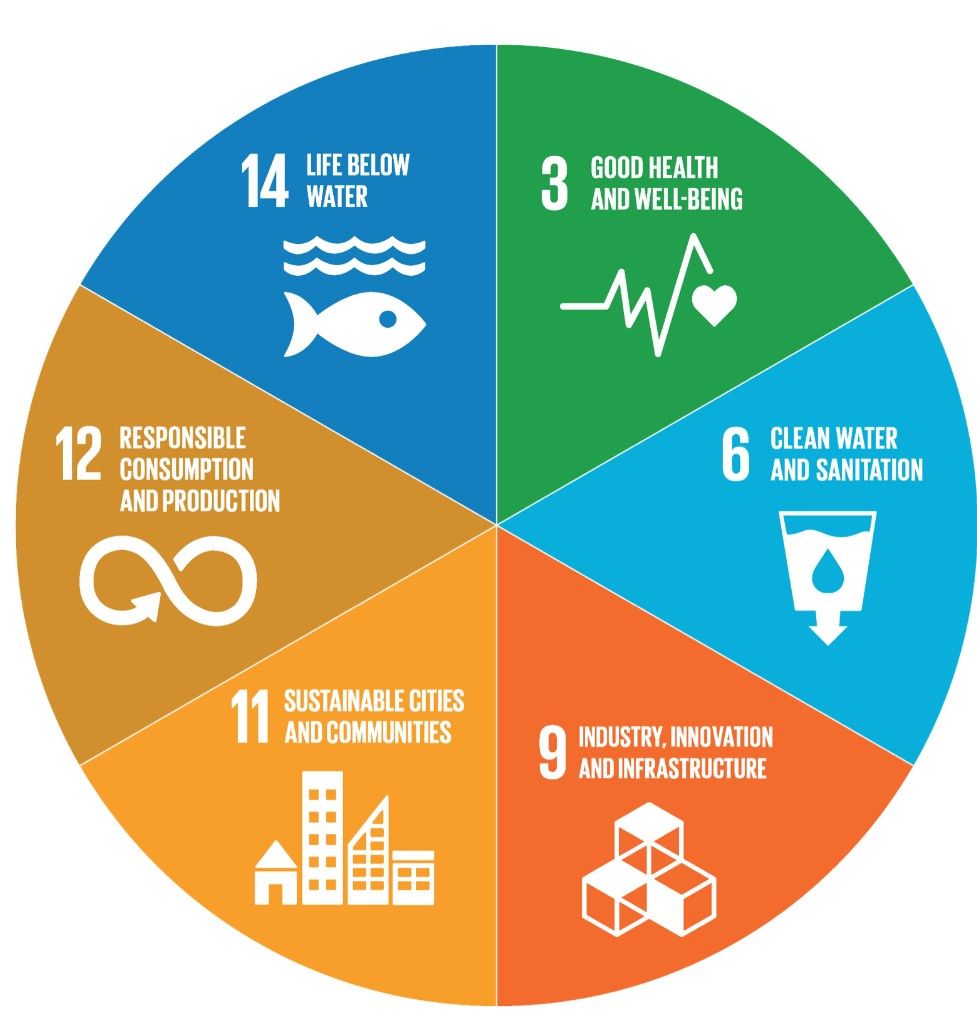
The Gyroid Sponge addresses two urgent priorities:
- Water safety – removing pollutants without residual waste.
- Circular economy – converting recovered material into durable construction polymers.
By training coastal and tribal communities to manufacture, deploy, and recover sponges, SORR built both cultural legitimacy and income opportunities, positioning itself at the intersection of environmental resilience and inclusive growth.

Strategy & Execution
Unlike many foreign entrants, SORR’s India strategy evolved organically through field experimentation and mentoring. Programs such as CSIRO RISE and NSW METS provided early networks and credibility.
Core design principles:
- CSR-funded collaboration. Corporates and government agencies finance remediation systems under CSR commitments, gaining environmental credits and visibility. Communities build skills and income through polymer recovery.
- “Made in India, Sold to India and the World.” Manufacturing near Panaji with Indian-sourced materials reduces costs, anchors the firm locally, and aligns with Make in India.
- Community stewardship. Training fishing and tribal groups to assemble, deploy, and maintain systems embeds ownership and ensures sustainability.
Local adaptation: To address India’s diverse conditions, SORR modified polymer composition for higher temperatures and lower salinity, designed modular units for river channels, translated training materials into local languages, and aligned pricing to CSR grant cycles.
Governance: Strategy is founder-led, with the CFO ensuring compliance and financial discipline. Local legal and tax advisors manage jurisdictional requirements, supported by transparent CSR reporting and licensing processes.
"We adopted a collaborative, CSR-funded model aligned with India’s Swayampurna program under a ‘Made in India, Sold to India and the World’ philosophy.
Impact & Results
SORR’s India presence is early stage but promising:
- Environmental and social outcomes - Pilots show improved water remediation and strong local engagement; formal metrics are under development.
- CSR-enabled livelihoods - Partnerships equip coastal communities particularly fishermen with training, stewardship roles, and new income streams.
- Institutional credibility - Collaborations with pollution control boards, port authorities, and an MoU with the Bharat CSR Network are strengthening scale and legitimacy.
"Our circular model empowers local communities and respects cultural nuances, making the beneficiaries of pollution the agents of change.

Lessons & Insights
Market Entry & Strategy
Positioned the gyroid sponge not just as a technology, but as a mission-driven community empowerment tool, which resonated with policymakers and funders.
Alignment with India’s Swayampurna program and CSR mandates unlocked early funding and created policy legitimacy.
Core Takeaway
Framing innovation as social impact, not just technology, can accelerate adoption and attract aligned partners.
Localisation & Capacity Building
Implemented microfranchising and training models to transform beneficiaries into operators, reducing costs and ensuring cultural fit.
This approach reinforced community trust and embedded local ownership
Core Takeaway
Local capacity building both reduces operational risk and strengthens long-term relevance.
Circular Economy Positioning
Recast pollution as a resource: polymer recovery demonstrated that remediation could generate value rather than costs.
Even modest sales of recycled material validated the commercial potential of the model.
Core Takeaway
Embedding a circular economy narrative broadens appeal to investors, regulators, and communities alike.
Regulatory & Policy Frictions
Navigating fragmented approvals across jurisdictions created delays and raised stakeholder expectations.
Flexible engagement and patience were required to manage diverse regulatory and cultural contexts.
Core Takeaway
In emerging markets, regulatory complexity must be anticipated as a structural feature, not an exception.
Operational & Supply Chain Challenges
Logistics of supplying sponges and recovering waste in remote areas proved more complex than anticipated.
Consolidating shipments and building local partnerships reduced costs and improved reliability.
Core Takeaway
Distributed models succeed when global innovation is paired with local logistics ecosystems.
Organisation & Resources
Early-stage pilots lacked benchmark data, limiting comparability and investor confidence.
As a mission-driven start-up, reliance on CSR funding highlighted the need for earlier external capital raising to build resilience.
Core Takeaway
Mission-driven ventures must balance purpose with early attention to capital structure and data credibility.
Broader Lesson for Cross-Border Business
SORR’s journey underscores that technology adoption in diverse markets depends less on technical performance and more on trust, localisation, and patient capital.
Scaling requires synchronising community empowerment with investor expectations and policy frameworks.
Core Takeaway
For social ventures, legitimacy is built at the intersection of policy alignment, local empowerment, and circular-economy storytelling.
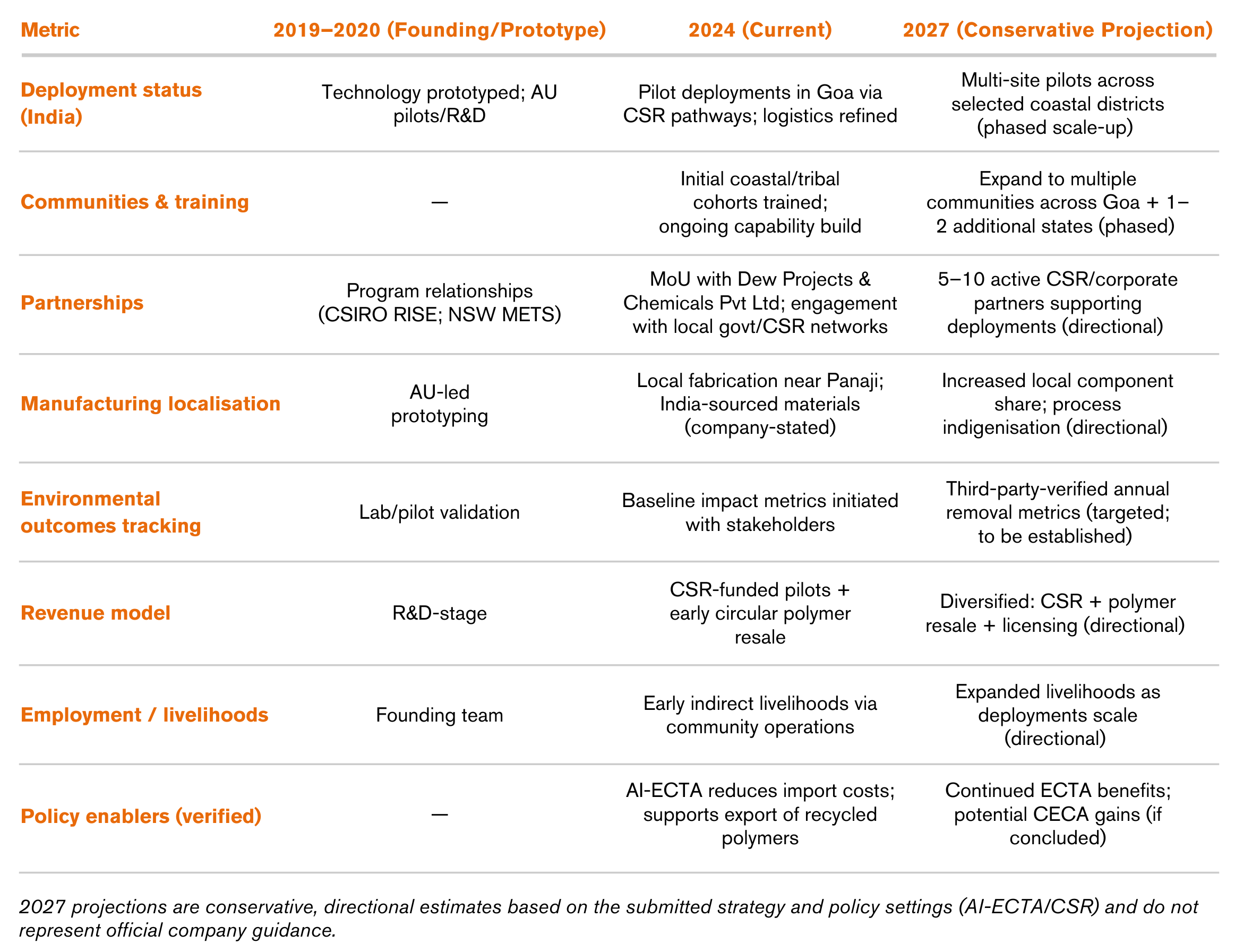
SORR stands at an inflection point. Having validated that its Gyroid Sponge can be manufactured locally, deployed by communities, and monetised through polymer recovery, the company is now focused on scaling across India’s coastal states.
Next-phase initiatives include:
- Technology innovation: Developing an autonomous floating robot for sponge deployment and recovery
- Scientific validation: Partnering with universities to quantify pollutant removal and strengthen credibility
- Inclusive financing: Piloting micro-finance schemes to enable community micro-franchisees
- Market expansion: Extending applications to inland rivers affected by agricultural runoff and industrial effluents
With trade barriers eased under AI-ECTA and rising political momentum for circular economies, SORR aims to demonstrate that waterway remediation can simultaneously create livelihoods, advance sustainability, and deepen Australia–India partnerships.
All information has been verified from primary company submissions, official filings, interview transcripts, and secondary materials cited in the References section.
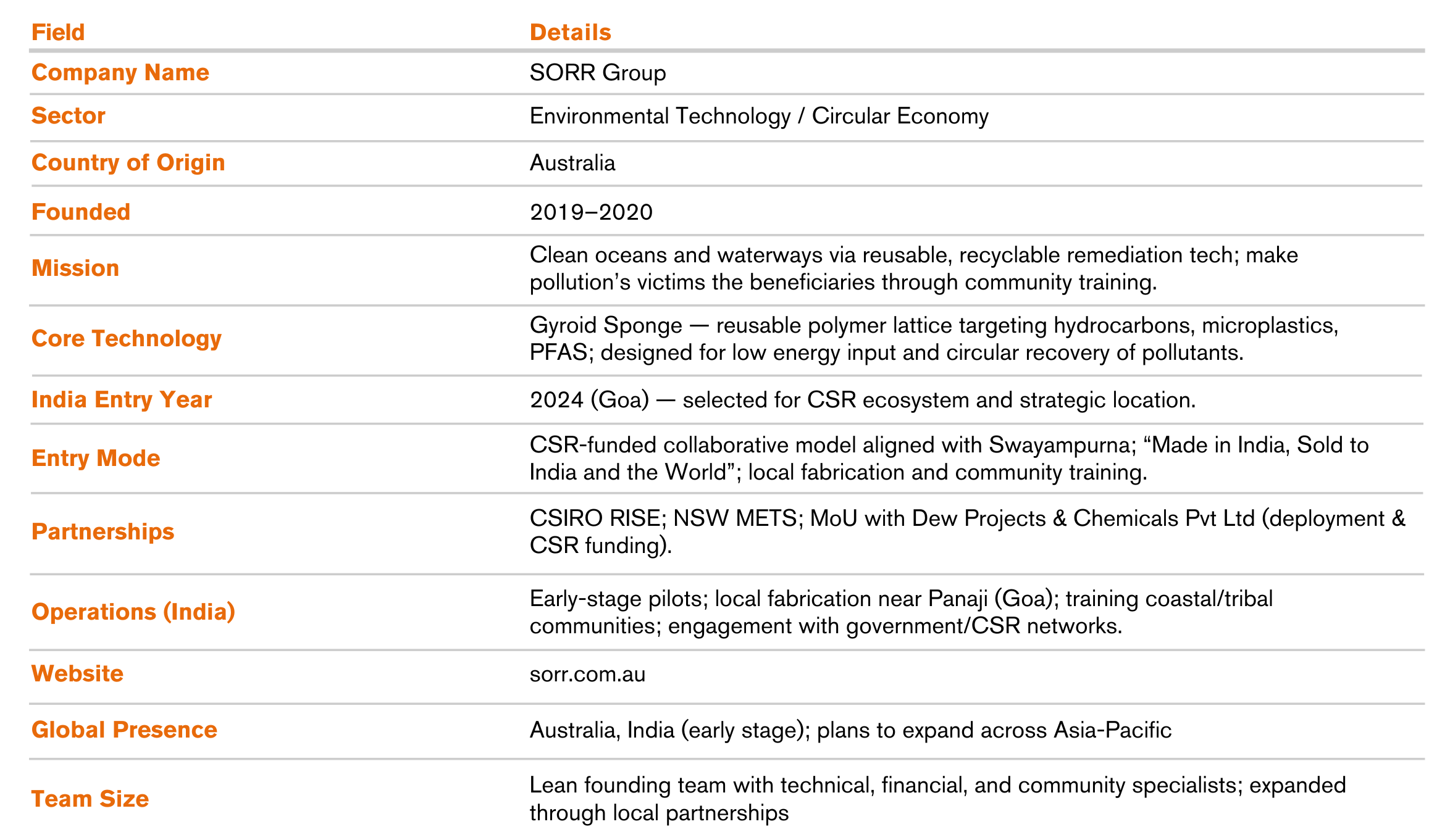
Company Snapshot
KPI Impact Snapshot