

How Canva Is Designing for Global Success Through the Australia–India Corridor
A Story of Localisation-at-Scale, AI-Powered Product, and Enterprise Credibility
Context & Opportunity
Founded in 2013 by Melanie Perkins, Cliff Obrecht, and Cameron Adams, Canva Pty Ltd. has evolved from a browser-based design tool into an AI-powered visual communication suite used by 260M+ monthly users, including 95% of the Fortune 500. With annualised revenue exceeding US$3.5B and a US$42B secondary valuation, Canva stands among Australia’s most valuable technology companies.
India’s scale, diversity, and creativity made it a natural next chapter. Today, India is Canva’s 4th-largest market and among its fastest-growing, driven by surging demand for AI-enabled products. Canva’s entry thesis centred on deep localisation, across language, culture, pricing, UX, and educationpartnerships,while maintaining a single globalcodebase.
The Australia–India Economic Cooperation and Trade Agreement (AI-ECTA) has further reduced barriers to digital collaboration, enabling stronger connections between distributed teams and creator ecosystems in both countries.

Strategy & Execution
Canva’s India expansion followed a deliberate Greenfield strategy, designed to localise deeply without fragmenting its global product DNA. Rather than acquire or outsource, Canva built a dedicated in-country team, enabling direct insight into India’s linguistic, cultural, and behavioural diversity. This local capability became the foundation of Canva’s “global-local” mindset - blending global technology with deeply local understanding.
The India team focused on reimagining the user experience for a mobile-first audience engaging across multiple languages and needs. The result: a product that felt both globally advanced and uniquely Indian.
Localisation extended far beyond translation - it celebrated India’s cultural richness. Canva introduced India-specific templates reflecting festivals and traditions such as Diwali, Pongal, Onam, and Independence Day, alongside wedding and business design themes. The platform now supports 13 major Indian languages and has a fully localised Hindi website.
Payment innovation mirrored this inclusivity: short-duration daily and weekly plans made Canva financially viable to millions of creators and small businesses. These moves strengthened reach, embedded Canva into India’s digital vernacular, and propelled it into the top four global markets.
"We’re simplifying design for India’s vibrant and diverse ecosystem of creatives, small businesses, educators, students, and entrepreneurs, and we’re incredibly encouraged by the rapid growth we’re seeing.
Partnerships formed the second pillar of Canva’s India strategy. Collaborations with 500+ Indian creators and partnerships with NCERT, Teach for India, and state education departments built a fast-growing community of freelancers and educators who co-created localised templates and learning content.
In 2025, Canva hosted its first large-scale creator–educator community event in India, a key milestone that strengthened trust and deepened roots within India’s creative and academic ecosystems.
Marketing further reinforced localisation. In August, Canva launched the second edition of its India campaign, ‘Dil Se, Design Tak’ - the campaign celebrates creativity, connection, and accessibility in design, reaching over 200M internet users and showcasing how design has become a universal language empowering people across India.
Finally, enterprise adoption solidified Canva’s commercial base. With 95% of the Fortune 500 already using Canva for brand governance, marketing automation, and content creation, Indian adoption accelerated, particularly among SMBs and government institutions.
The short-duration payment model, pioneered in India to serve value-conscious customers, has since been exported to other emerging markets, positioning India not just as a growth driver but as a product innovation hub.
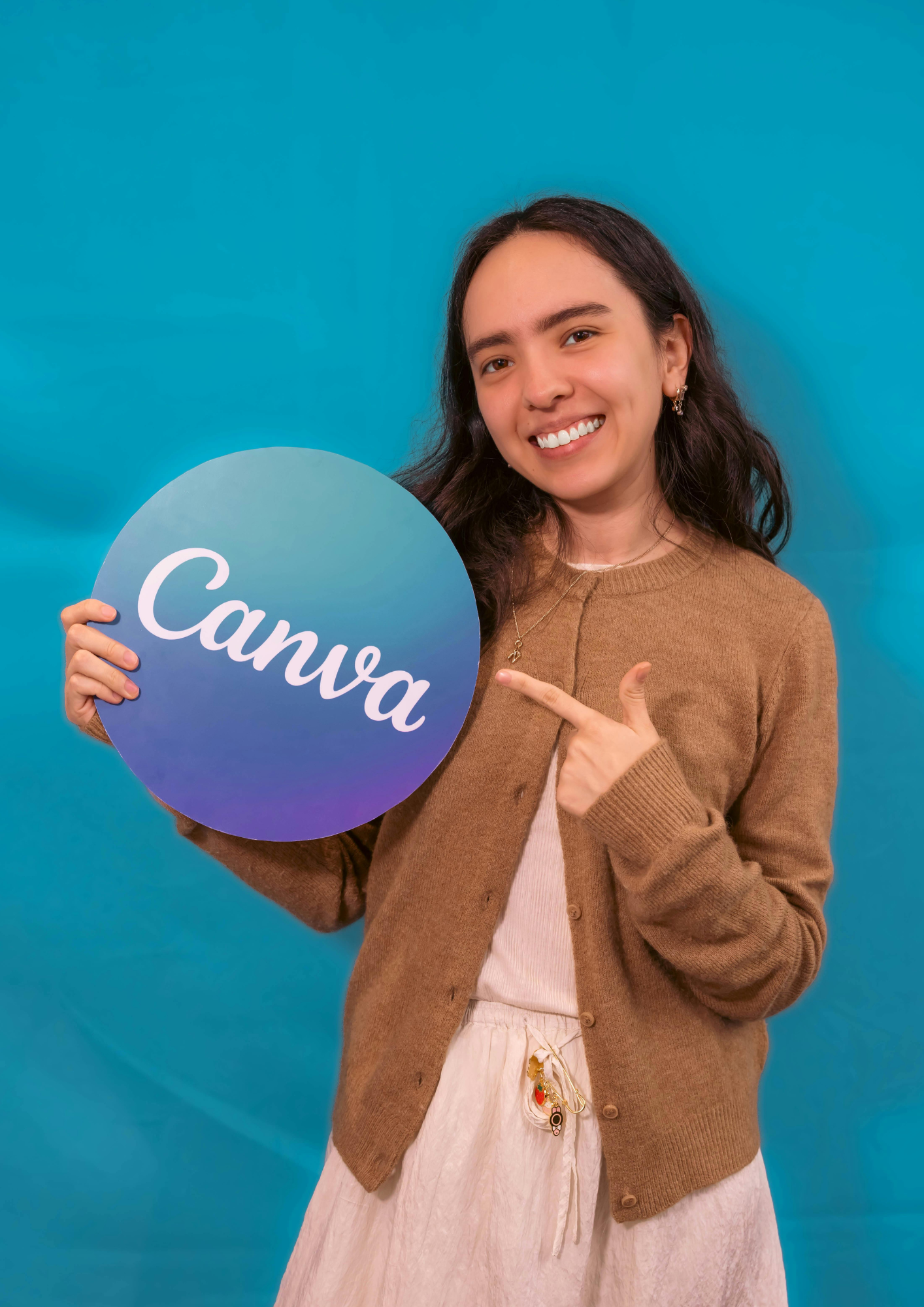
"India isn’t one market, it’s many. Success requires localisation across language, content, pricing, and access. We build with and for the community, establish local teams early, and invest in learning before scaling."
Impact & Results
Operationally, India has become one of Canva’s most efficient growth engines. Local product teams rapidly test and iterate features before global release, shortening feedback loops and reducing time-to-market. The sachet pricing framework, born from India-led experimentation, now informs Canva’s emerging-market strategy worldwide.
Through Canva Education, millions of students and teachers now have free access to premium design tools, embedding creativity into classroom learning and supporting digital inclusion.
Culturally, the “Dil Se, Design Tak” campaign has deepened brand trust and advanced digital literacy. By empowering Template Creators, Element Creators, and Specialty Creators, Canva has enabled new income streams and elevated the creative middle class within India’s gig economy.
This ecosystem effect, bridging education, entrepreneurship, and enterprise, has established Canva as both a global brand and a local ally.
Ultimately, Canva’s India expansion proves that cultural sensitivity, product localisation, and ecosystem partnerships can be as powerful as technological innovation. By building trust across communities and institutions, Canva has transformed its India operations into a model for sustainable, inclusive, high-growth digital enterprise, reinforcing its founding mission to democratise design for everyone.

Lessons & Insights
Localisation Beyond Translation
Canva recognised that localisation is more than language. By building region-specific templates, multilingual campaigns, and culturally relevant designs around Indian festivals and trends, Canva created deep emotional and practical connections with users.
Core Takeaway
Cultural resonance and everyday relevance drive stronger adoption than one-size-fits-all global approaches.
Build In-Country Capability Early
Instead of managing India remotely, Canva invested in local teams to understand user behaviour, pricing, and design culture first-hand. This proximity enabled faster product iteration, mobile-first improvements, and authentic local insights.
Core Takeaway
Early investment in local talent strengthens feedback loops and speeds up product–market fit.
Educators and Creators as Distribution
Partnerships with NCERT, state governments, and a vast network of educators and creators turned the community into Canva’s most powerful growth engine. Teachers, freelancers, and small business owners became organic ambassadors, spreading Canva across classrooms, startups, and creator circles.
Core Takeaway
Empowered communities fuel scalable, low-cost growth and lasting brand advocacy.
Single Suite, Many Use Cases
With Visual Suite 2.0, including Canva Sheets, Canva AI, Canva Code, and Magic Studio, Canva evolved from a design tool into a comprehensive creativity and productivity suite. Integrating design, data, and workflow features expanded its relevance from individuals to teams and enterprises
Core Takeaway
Solving multiple problems through a unified product deepens engagement and retention.
Enterprise Proof Points Matter
As the partner of choice for 95% of Fortune 500 companies, Canva’s enterprise credibility built instant trust among Indian corporates and government bodies. This validation reduced friction in local sales and accelerated institutional adoption.
Core Takeaway
Global enterprise success builds confidence and unlocks faster local market penetration.
Policy as a Product Enabler
The Australia–India Economic Cooperation and Trade Agreement (AI-ECTA) streamlined digital trade, compliance, and monetisation flows. This policy environment enabled Canva to scale efficiently in India while maintaining Australian governance and IP standards.
Core Takeaway
Supportive trade policy can be as powerful a growth lever as product innovation.
All information has been verified from primary company submissions, official filings, interview transcripts, and secondary materials cited in the References section.