
How Auto Ingress Is Turning India into Its Next Growth Hub
Story of Localisation, Partnership, and Manufacturing Scale
Context & Opportunity
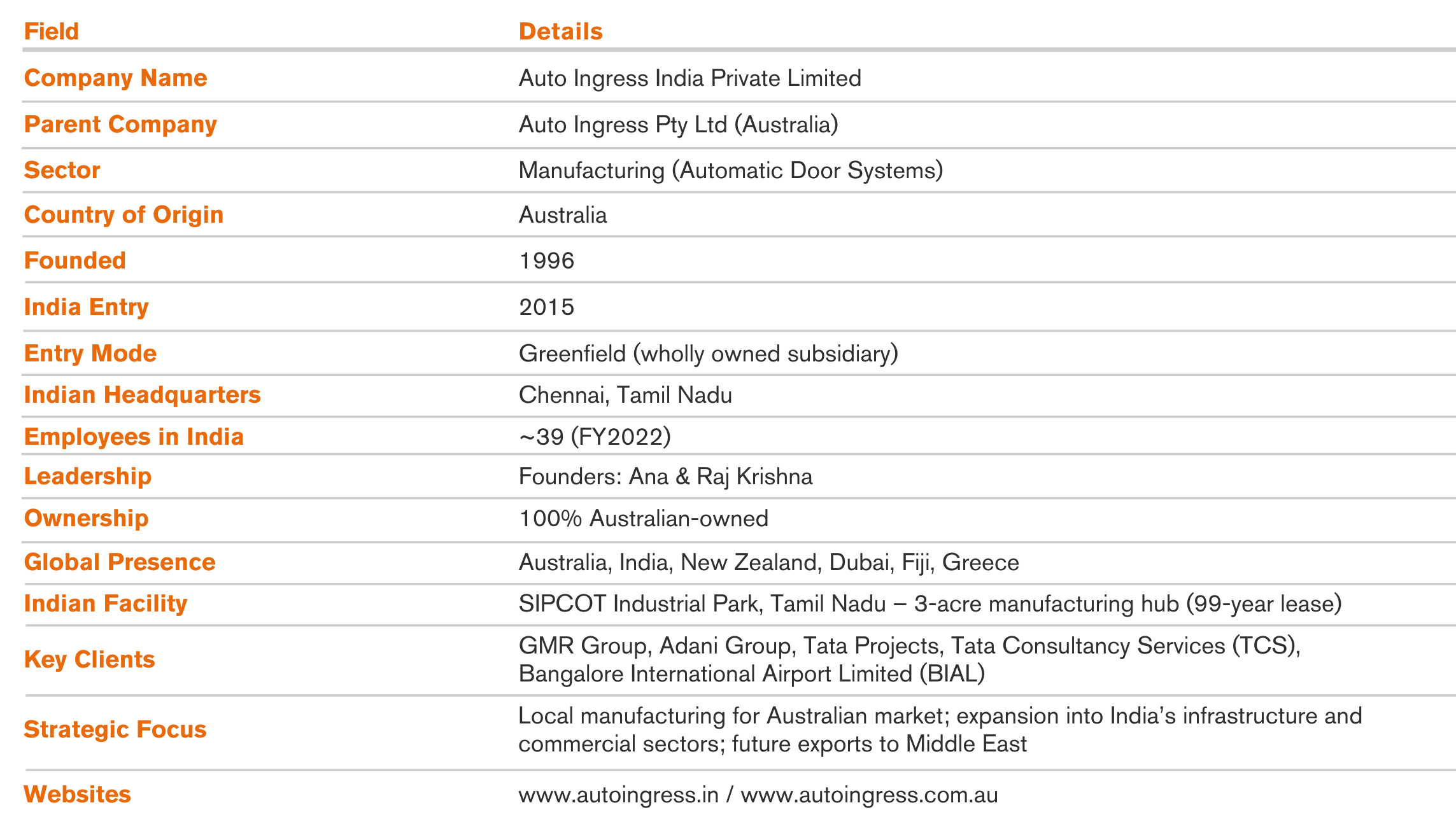
Auto Ingress is Australia’s largest locally owned OEM of automatic door operators and a compelling case of strategic evolution. Founded in 1996 by Ana and Raj Krishna, the company’s philosophy has always centred on in-house R&D, design, and manufacturing excellence to ensure high-quality, standards-compliant products.
The company’s entry into India was born from strategic necessity rather than opportunism. A decade ago, Auto Ingress saw its Australian competitors offshoring manufacturing to lower-cost markets, eroding domestic competitiveness. As Ana Krishna noted, “It was only a matter of time before we would have to shift our operation overseas in order to stay competitive.”
What began as a risk-hedging move to support the Australian supply chain soon evolved into a transformational market play.
The choice of Tamil Nadu was both personal and practical, rooted in ancestral ties, a trusted local employee, and the state’s English-speaking talent base and industrial infrastructure. The entry coincided with the launch of India’s “Make in India” initiative (2014), which incentivised foreign manufacturers. The true inflection point came with the discovery of India’s domestic opportunity; a market whose infrastructure and automation needs far exceeded expectations.
The company’s ambition evolved in three phases: first, India as a cost centre to supply Australia; second, as a profit centre serving local demand; and finally, as a global manufacturing and export hub. This strategic pivot unlocked a market that now extends far beyond cost arbitrage, into long-term growth, localisation, and global scale.
Strategy & Execution
Auto Ingress adopted a greenfield strategy, establishing Auto Ingress India Private Limited in 2015 as a wholly owned subsidiary. The localisation blueprint was multi-layered. Initially, India produced manufacturing kits for the Australian market, but as domestic demand surged, the company rapidly pivoted to serve Indian customers directly.
It built local sales and technical teams to engage major clients, navigate tenders, and manage service contracts. Simultaneously, it developed an integrated business services hub in Chennai to handle service administration and contract management for Australian operations, creating a symbiotic dual-market model. The Indian entity now supports both local profitability and group-wide operational efficiency.
A cornerstone of its success is leveraging its Australian brand identity. In a market dominated by low-cost imports, Auto Ingress positioned itself as a premium provider of Australian-engineered systems, competing on reliability, safety, and performance rather than price. Its client portfolio, spanning airports, IT campuses, and large infrastructure firms, underscores that durability and compliance are valued differentiators. Quality control remains central, with core components still sourced from Australia to maintain consistency and reputation.
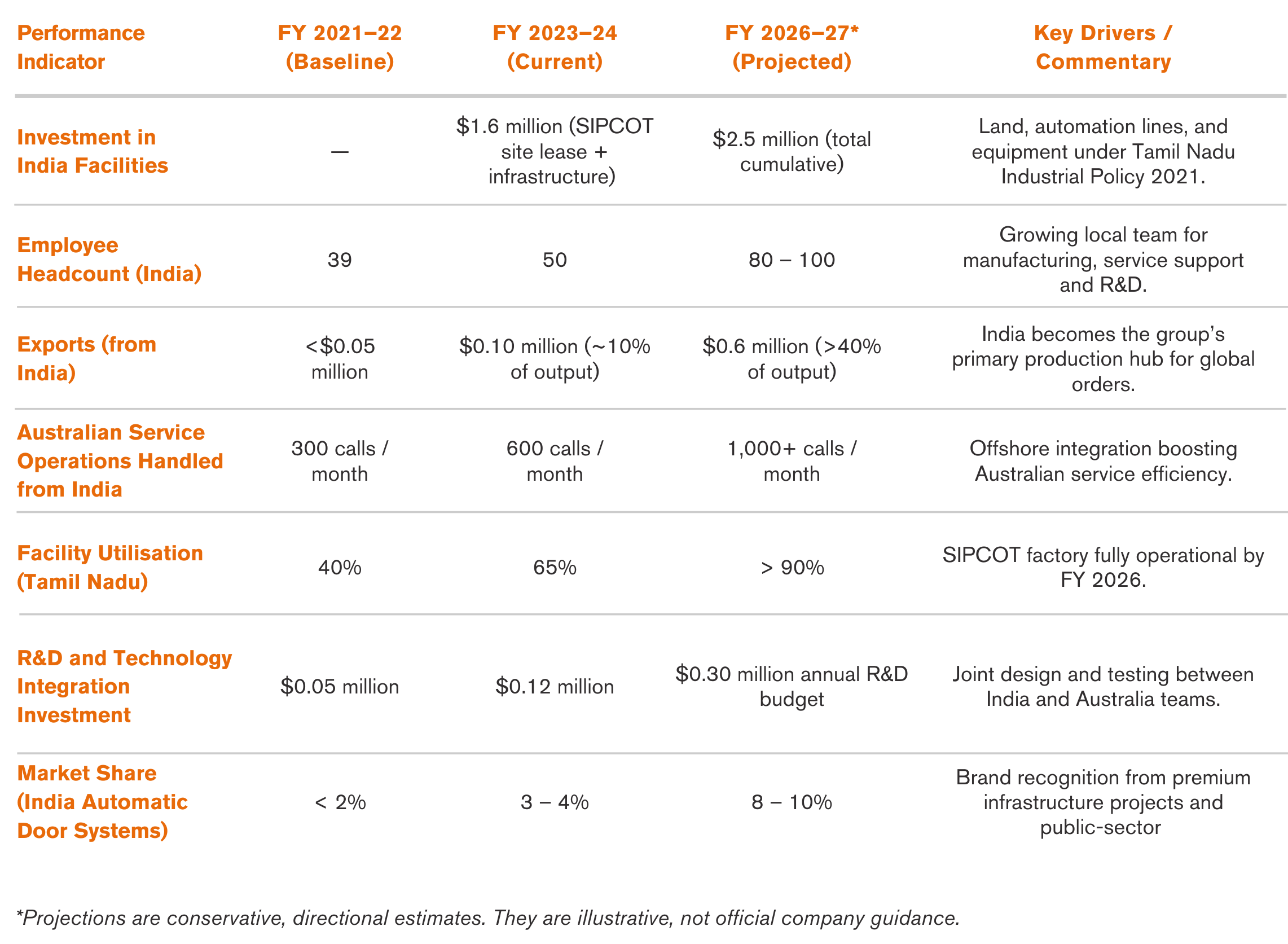
The most critical enabler for Auto Ingress’s expansion has been its partnership with the Tamil Nadu government. Facing capacity constraints, the company secured a 3-acre plot in SIPCOT Industrial Park on a 99-year lease, valued at approximately $1.6 million including infrastructure. This support, under the Tamil Nadu Industrial Policy 2021, provided subsidised land and investment incentives, reinforcing that while “Make in India” is a national vision, execution depends on state-level partnerships.

Impact & Results
Auto Ingress India has built a robust financial and operational foundation. The subsidiary’s authorised capital of $180,000 and paid-up capital of $150,000 signal sustained parent investment. For FY2022, revenue reached $290,000, providing a commercial baseline for scale-up. The team now employs nearly 40 professionals, with steady expansion planned alongside factory commissioning.
The operational impact on group efficiency is material. The Chennai-based service centre handles over 600 service calls monthly from Australia, significantly improving turnaround and cost efficiency. India thus functions not just as a market, but as a capability extension of the Australian business.
Despite its small market share, Auto Ingress has secured landmark projects that build brand equity and prove concept viability. Clients include GMR Group, Adani Group, Tata Projects, Tata Consultancy Services (TCS), and Bangalore International Airport Limited (BIAL), as well as public-sector facilities such as Tidal Parks, Tamil Nadu. These contracts validate both the technical quality of its systems and the strategic wisdom of its domestic-first pivot, positioning the company as a premium, high-trust player in India’s growing automation market.
"Business is business all over the world, you have to stay with your convictions. You need to have patience and even if you fail, you should have the gut.
Lessons & Insights
Market Entry & Local Adaptation
Faced significant differences in business norms, including expectations of upfront payments, intense price negotiations, and thinner margins than in Australia.
Adapted its commercial model and pricing to match Indian market realities while retaining product quality as a differentiator.
Core Takeaway
Successful market entry in emerging economies demands flexibility and a willingness to recalibrate operating models without compromising brand integrity.
Market Education & Technology Adoption
Introducing premium automation technology required extensive market education to demonstrate its value versus low-cost substitutes.
Early engagements focused on awareness and proof-of-performance before premium pricing could be justified.
Core Takeaway
In price-sensitive markets, the first challenge is not competition, it’s education. Awareness and demonstration must precede differentiation.
Public Sector & Policy Engagement
Navigated bureaucratic processes and regulatory requirements through proactive state-level engagement.
Partnership with the Tamil Nadu government and SIPCOT turned a potential challenge into a strategic enabler, securing subsidised land and infrastructure.
Core Takeaway
In India, patient and strategic collaboration with state institutions can convert administrative complexity into competitive advantage.
Cross-Cultural & Organisational Learning
Initial projections of rapid profitability proved optimistic; growth required longer gestation than planned.
The Indian entity’s gradual financial maturity underscores the importance of aligning expectations with market development cycles.
Core Takeaway
In emerging markets, strategic patience is a performance asset, long-term presence often outperforms short-term profit targets.
Leadership & Local Empowerment
Success relied heavily on a trusted Chennai-based leader who bridged Australian decision-making with local execution.
Empowering Indian managers to lead client relationships and operations proved critical for credibility and agility.
Core Takeaway
Empowered, on-the-ground leadership is the strongest currency for translating a global strategy into local success.
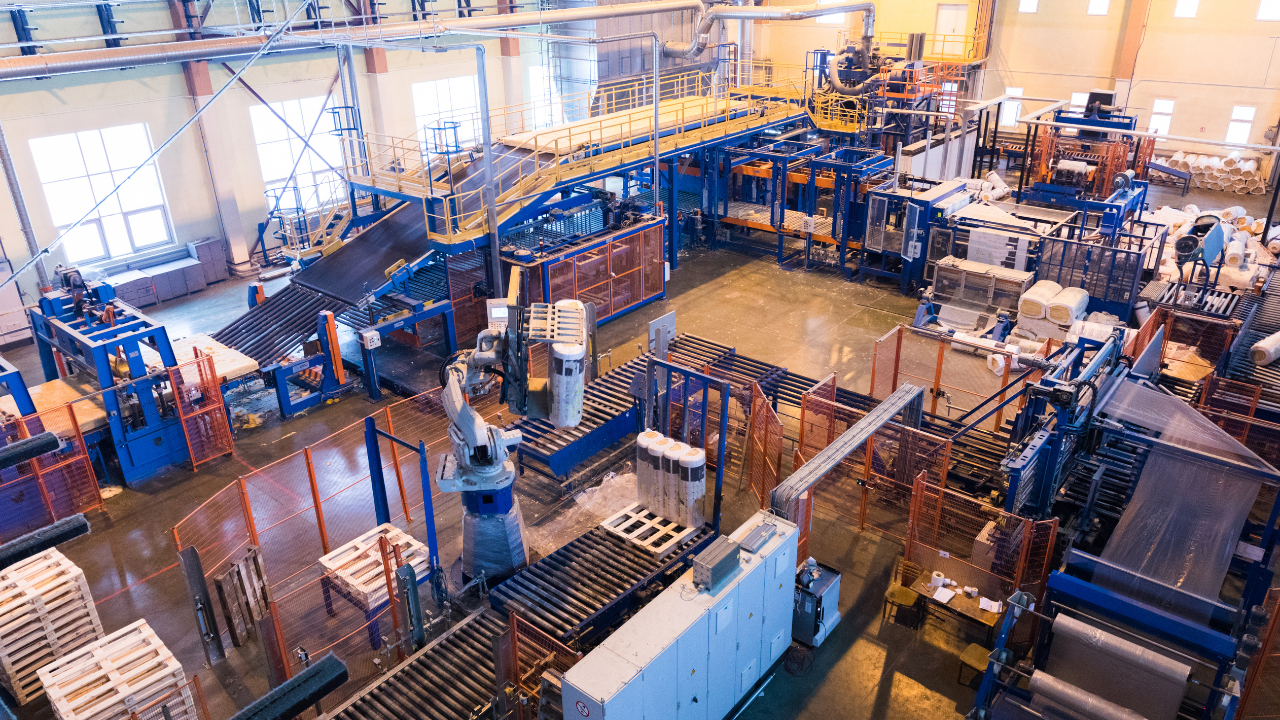
Auto Ingress’s next phase is anchored in the commissioning of its new state-of-the-art manufacturing facility in Tamil Nadu, which marks a decisive transition from limited-scale operations to full-capacity production. The new facility will enable the company to overcome current supply constraints and fulfil its original goal of producing cost-efficient automatic door systems for both domestic and export markets. Over the next three to five years, the company plans to progressively localise its supply chain, targeting a 100% “Made in India” product ecosystem that meets both Australian quality benchmarks and Indian market needs.
This manufacturing base will serve as a launchpad for regional exports to high-growth markets such as the Middle East and Southeast Asia, where price sensitivity and infrastructure expansion create significant new demand. With its lean cost structure, localised manufacturing, and high Australian design credibility, Auto Ingress aims to compete directly with multinational incumbents in these markets. Simultaneously, the Indian operation will continue to serve as the service, engineering, and business-support hub for Australian operations, enhancing group efficiency and responsiveness.
By FY2027, Auto Ingress envisions India as the core pillar of its global operations, a market that is not merely an offshore extension but a centre of innovation, manufacturing excellence, and export competitiveness.
As co-founder Ana Krishna affirmed, “Those are the markets we will attack after we settle in, that’s where we’re heading.”
This next chapter represents not just a geographic expansion, but the transformation of Auto Ingress from a niche Australian manufacturer into a globally integrated player.
All information has been verified from primary company submissions, official filings, interview transcripts, and secondary materials cited in the References section.
Company Snapshot
KPI Impact Snapshot